
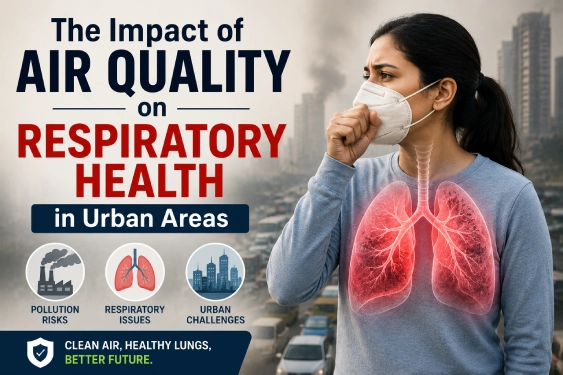
The Impact of Air Quality on Respiratory Health in Urban Areas
Air pollution and health are now always mentioned together, literally at home, for anyone who lives in one of India’s burgeoning cities. Air quality has become a prominent topic in public health and urban planning; every breath taken in Guwahati’s clotted junctions and Delhi’s murky skyline has its share of what modernity leaves behind.
You can’t see the air, but urban dwellings’ impact on the air and your body is clear to see when you read the statistics of rising cough, increasing asthma attacks, and climbing hospital visits defined by respiratory issues in cities today.
The impact of air quality on respiratory health is not just near the policy on an accident or the air quality news headlines; you can feel it in your chest on your way to work after traffic, or while taking a morning walk on a busy road.
Bad air quality doesn’t just affect how well we breathe, but is insidiously programming our health for the future. As more cities strive to improve the air quality in communities and strengthen the policies that relate to the urban respiratory health of individuals and populations, there is one truth that is becoming clearer: addressing pollution and lung health and air pollution is no longer an option, but essential to how we live, work, and breathe.
In India specifically, which hosts a number of ‘most polluted cities in the world, poor air quality is a slow and insidious public health crisis. Every breath, every heartbeat, and every area is affected.
As cities from Delhi and Mumbai, to Guwahati and Dibrugarh, continue to struggle with air pollution, it is not only a major contributor to the adverse health effects of climate change, but is also damaging the lung health of millions more.
Understanding Air Quality: What’s in the Air We Breathe?
Air quality refers to how much pollution is in the atmosphere, and when it comes to cities, it can be alarmingly high. According to IQAir’s Global Air Quality Report, India had 11 of the 15 most polluted cities in the world in 2024.
Below are some principal air pollutants, which affect urban health in particular:
- PM2.5 and PM10 (Particulate Matter). These are from auto exhausts, construction dust, and biomass burning. PM2.5 is particularly of concern, as those particles travel deep into the lung and, in some cases, can enter the bloodstream.
- Nitrogen Dioxide (NO₂): is mainly from diesel engines and congested traffic. It irritates and inflames the airway and worsens the incidence of asthma.
- Sulphur Dioxide (SO₂): is produced when coal is burned and from industry. It causes inflammation of the lungs.
- Ozone (O₃): is a secondary pollutant formed from a reaction between sunlight and vehicle emissions. It causes coughing, chest tightness, and worsens lung function.
In Assam, air quality is better than in the Indo-Gangetic Plain, yet cities like Guwahati, Digboi, and Dibrugarh are facing increasing air pollution from traffic, local construction, and nearby industry.
How Poor Air Quality Impacts Respiratory Health
The lungs are essentially our first line of defence, and they are also the first to be harmed. When harmful particles and gases are breathed in, the airways become irritated, inflammation occurs, and the lungs lose their natural ability to clear themselves.
Short-Term Effects:
Polluted air may cause health effects within a few days of exposure, including,
- Coughing, irritated throat and shortness of breath,
- Attacks of asthma or allergic bronchitis
- Chest discomfort, fatigue,
- Diminished ability to exercise–such as walking or jogging
A 2023 Indian Council of Medical Research (ICMR) study showed an increase of ER visits for asthma and bronchitis of up to 15% in patients in Indian metro cities during high AQI days of the Air Quality Index when compared with days of low AQI.
Long-Term Health Impact
The prolonged exposure to pollution not only exacerbates ailments, it also causes damage. Over time, this damage may lead to:
- Chronic Obstructive Pulmonary Disease (COPD): The number one cause of death from respiratory disease in India, often aggravated by pollution and indoor smoke.
- Diminished Lung Function in Children: Children living in polluted areas develop diminished lung function; children in one Delhi study had 43% lower lung function as a result of pollution, compared to children in less polluted areas.
- Increased Risk of Lung Cancer: The WHO now classifies outdoor air pollution as a carcinogen and is especially linked to diesel pollutants.
- Increased risk of Infection: Polluted air weakens bodily defenses against infection and results in increased cases of pneumonia, bronchitis, and tuberculosis flare-ups.
Why Urban India is Particularly Vulnerable
Urbanization in India is associated with development, but also pollution. This same development occurs in urban areas like Guwahati, Delhi, and Mumbai, which have serious air quality implications.
1. Vehicle Emissions
India has more than 30 crore registered vehicles, many of them petrol or diesel. These emit huge amounts of PM2.5 and NO₂, plus older vehicles and poor fuel standards exacerbate these impacts.
2. Construction and Road Dust
In many cities, dust from continuous construction, poor waste management practices, and the open dumping of construction debris add tonnes of dust to the air in an urban setting. In Guwahati, significant dust from construction along the Brahmaputra corridor has been recognized as an important contributor.
3. Industrial and Brick Kiln Emissions
In Assam and other states, oil refineries, coal-related industries, and small factories are sources of emissions that contribute a combination of sulphur and nitrogen oxides into the local air.
4. Crop and Waste Burning
Every post-harvest season, smoke from the burning of agricultural residue from northern areas moves towards the east and has its impact in parts of Assam as well.
5. Indoor Pollution
In several homes, and particularly in rural and peri-urban areas, the use of biomass fuel (wood, coal, dung) for cooking results in a toxic smoke that can lead to chronic bronchitis and COPD among those who cook, who, in many cases, are women.
Common respiratory issues linked to or aggravated by pollution
Asthma
Asthma impacts more than 35 million individuals in India, with urban pollution being one of the most important triggers. Elevated levels of NO₂ and PM2.5 can lead to frequent respiratory attacks, especially in children and the elderly.
Chronic Bronchitis and Chronic Obstructive Pulmonary Disease (COPD)
India has the second-highest burden of COPD cases in the world. Even non-smokers are at an increased risk of contracting COP because of chronic exposure to toxic vehicular and industrial emissions.
Lung Cancer
The National Cancer Registry Programme data show the steady rise of lung cancer in urban Assam and that the rate of lung cancer in non-smokers is on the rise, likely due to chronic exposure to ambient air pollutants.
Respiratory Infections
Children exposed to high levels of pollution are at a higher risk for colds, pneumonia, and sinus infections. Seasonal influences lead to higher hospitalization rates for lower respiratory tract infections in the winter months, coinciding with worsening air pollution characterized by higher smog levels.
The Human Toll of Poor Air Quality
Air pollution has negative consequences for health, economic growth, and equality. The Energy Policy Institute at the University of Chicago (EPIC) suggests that reduced air quality reduces the average person’s life expectancy by 5.3 years in India.
The World Bank estimates that India loses over eight percent of its GDP every year from air pollution, due to health costs and lost productivity.
Furthermore, the burden of air pollution is not equal. Low-income families are likely to live near highways, dumpsites, or industrial areas, and they typically do not have access to healthcare or air filtration.
Cleaning the air should not be a privilege; it should be a basic human right.
Enhancing Respiratory Health in Cities: What is Possible?
Air Pollution will require resilience at the government and individual levels.
Government and City Efforts:
- Adopt Clean Fuel Requirements: The introduction of Bharat Stage VI fuel standards is based on real reductions of vehicular emissions of up to 60%.
Increase Public Transportation Opportunities:
- Buses, electric vehicles, and shared mobility can significantly reduce transportation emissions.
Add Green Space to Cities:
- Urban forests, parks, forests and tree belts capture dust and generate oxygen.
Monitor Air Quality in Real Time:
- The City of Guwahati has begun continuous air quality monitoring efforts, which are critical for transparency and accountability.
Ban Open Burning in All Forms:
- Increasing enforcement on open burning of crop residue and burning garbage is a crucial step in reducing winter-time pollution levels.
Personal Steps You Can Take
- Stay Indoors When Air Quality is Poor: Outdoor exercise tends to be the most harmful in early morning and late evening hours when pollution levels are maximum.
- Wear Masks: N95 or similar masks can filter harmful fine particles.
- Increase Indoor Air Quality: Air purifiers, houseplants such as snake plant and peace lily, and regular ventilation can help improve air quality indoors.
- Eat Antioxidant Foods: Foods that contain high levels of antioxidants (e.g., turmeric, citrus fruit, or leafy greens) can help mitigate lung inflammation.
- Stay Hydrated and Quit Smoking: Water keeps mucous membranes healthy, and avoiding smoking reduces combined pollution damage.
Air Quality: A local overview
Assam’s air quality is variable, generally better than India’s big cities, but certain areas have seen declining air quality.
The air quality index (AQI) is often around 120-180, or moderate to poor, in Guwahati, mainly due to emissions from traffic and dust.
Digboi experiences industrial emissions from an oil refinery.
Dibrugarh and Tinsukia are experiencing increasing particulate emissions from coal mining and transport.
The Assam State Pollution Control Board (ASPCB) has been monitoring and creating awareness and education, but increased urbanization means a need for increased action at the local level (clean public transit and community tree planting, for example).
The Journey Forward: Reviving Hope
Despite the alarming headlines, there are signs of hope. The National Clean Air Programme (NCAP) aims to achieve a reduction of PM2.5 and PM10 levels in Indian cities of up to 40 percent by 2026. Electric vehicles, solar power initiatives and sustainable infrastructure projects are taking root.
Every citizen can also contribute to the cause by driving less, planting more, and increasing awareness. Cleaner air isn’t just about saving the planet; it’s about saving ourselves.
Conclusion
Ultimately, it is evident that the connection between air pollution and health is beyond numbers; it impacts how we live, breathe and thrive every day. As respiratory issues proliferate in urban areas, the recognition that clean air is a necessity of health, and not just a privilege of comfort, should be recognized. Regardless of whether it is asthma, chronic cough, or fatigue caused by air not being clear, knowing the relationship between pollution and your lungs is the first step to improved health.
At Dispur Polyclinic & Hospitals, we believe in caring for the whole person, not just treating illness, but preventing it. Our specialists are dedicated to improving urban respiratory health through comprehensive assessments, personalised care plans, and awareness about lifestyle and environmental triggers.
At Dispur Polyclinic & Hospitals, we are committed to being present for the entire individual, not simply treating a condition but often preventing it from occurring. Our specialists are committed to augmenting Urban-related respiratory health through a thorough assessment, tailored care plans, and education about lifestyle and environmental triggers.
If you are worried about pollution or simply want to consult an expert pulmonologist in Guwahati about looking after your lungs, we are here to help. Call Dispur Polyclinic & Hospitals at +91-8822669275 to reserve your consultation today.

Leave feedback about this